Clarity on the Mailbox Rule
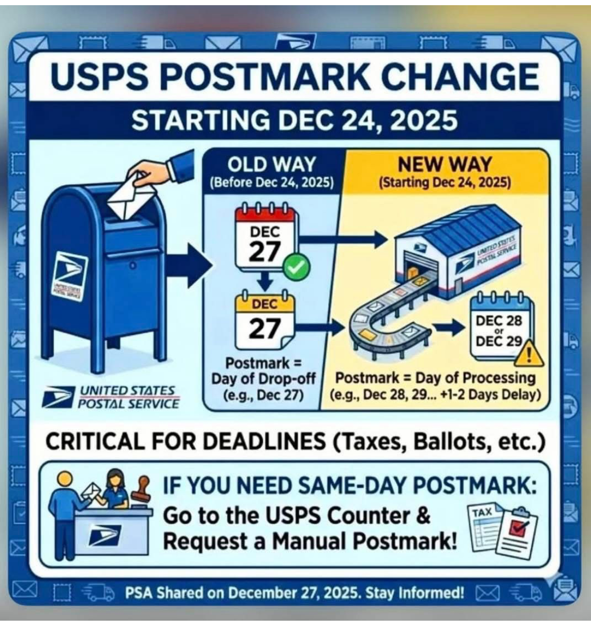
Hi there, Champs.
I have a vague recollection from law school of a common law practice called "the mailbox rule." I don't remember what the rule was exactly - is something timely when it's mailed or when it's received - and apparently, other people didn't understand it either. As a result, people started circulating the above graphic which helpfully notes that a letter is postmarked when it's processed, not when it's put in the mail. I don't know if the above graphic is from the USPS or if it was generated by AI on the prompt of an over-eager postal enthusiast. Regardless, it does reflect the rule as stated in the Federal Register.
Who on God's green earth still mails stuff? And why is it relevant to arbitration? You would be unpleasantly surprised by the number of collective bargaining agreements which require physically mailed notice and about which many timeliness arguments have been made. The unions that represent postal workers, for example, are pretty adamant about using the USPS for sending notice. Both parties will argue about postmarks and service dates even if they've also emailed and hand-delivered their disciplines, grievances, and responses. Remember, the arbitrator has to follow the CBA and cannot unilaterally declare that email delivery constitutes service if the CBA says otherwise.
I'm actually calling this to your attention to a different reason. It's a good idea to go look RIGHT NOW at your contract to see what method of delivery is specified for communication. Is it "outdated" like mailing or faxing? Or is the contract silent but the practice of using certified mail has been consistently used? Getting familiar with the details of your contracts timelines and methods of service is vitally important if you want to avoid losing a case on a technical mistake. This is especially important for unions where their duty of fair representation extends to avoiding administrative mistakes.
Some parties like to keep their technically burdensome notice and delivery rules, but it's worth asking who they've hurt more over the life of the contract. Ultimately, strict timelines and service requirements may not serve the labor management relationship if they prevent grievances from getting resolved.
tl;dr: Always read your contract, and consider bargaining for modern methods of communication in the grievance procedure.


